Thursday, February 7, 2019

How to Love Others Better

Most of us consider ourselves to be loving people. Yet we often feel unloved and lonely. It doesn't seem to matter whether we are single or married. We look for love in all the wrong places usually in another person. We think - mistakenly - another person can fill that hole in our hearts. We rush to get married and soon after the honeymoon phase, reality kicks in. Since February is the month of love, today I'll be sharing on the key to feeling truly loved because when we feel truly loved, we are free to give that love away to others and the world desperately needs more love.

A lot of the problem starts with our limited and romanticized understanding of love. 
What is love, exactly? First off, let's realize what love is NOT. Love is not a feeling.  All that mushy gooey stuff you see in the movies and on television is either superficial romanticism, sex, or lust. It is not the stuff long-lasting relationships are made of.

Second, love is an action and a choice.
We often are more concerned about "getting" rather than "giving" and this is the complete opposite of how love works. Love means going out of yourself  and leaving the "What about me" mentality behind, to do something good for the benefit of another, even when you don't feel like it or it's inconvenient.

We need to understand where and from whom we learned to love. 
Learning to love is a life-long process. Our parents are the first examples of love  We can learn a lot from them - what to do and what not to do. We learn from our dating experiences - what worked and what didn't. We learn from observing "happily married couples". Whenever I see a couple married for years, I always ask them what is their secret. I think the best way to learn about love is from God himself.

The best example of love is God. 
We've all heard the phrase "God is love", but what does that really mean? To me, God is love means if we want to know how to love, we should look at God and who is the clearest manifestation of God? His Son, Jesus, of course.

God sent Jesus to earth to show us His great love for us and also to show us how to love others: by accepting those different from us, by not judging others, by showing compassion, and by sacrifice.

"God so loved the world that he gave his only begotten Son so that whosoever shall believe in him shall not perish." (John 3:16). Notice the verb "gave". God took action to show us his love.

Jesus modeled love. He took time to heal people, to bring people back to life, to provide food for the hungry. These are all ACTIONS that show love. Most importantly he gave his LIFE to show us how much he loves us.

If you look at the list below, you will see that Jesus modeled all of them.


So, if you'd like to feel more loved, why not try being more loving? We get what we give. Here are some questions to reflect on to get you started:

1) How do I show love?
2) From whom did I learn to love?
3) How can I love better?
4) Who can I show love to today?

For practical suggestions, check out 1 Corinthians 13 which spells out several facets of being a truly loving person and Ephesians 5 which talks about how to love others.

I hope this post has given you a different perspective on love. If you enjoyed it and would like to become part of our community, enter your email address in the box provided. You'll receive my bi-weekly posts and a copy of my free e-guide "7 Steps to Finding Your Spiritual Path". 

Until next time, practice loving more, for whatever you give out to others will return to you manyfold.

Keep looking up!


Ariel Paz

All rights reserved. If you wish to use this material, contact me at arielpaz08@gmial.com. 

Tuesday, February 5, 2019

5 Keys to Living a Fulfilled Life

Are you content with your life? Are you accomplishing your goals and dreams? Do you look forward to starting each new day? If so, then you are living a life of wholeness but there is always something new to learn to move forward, have more joy and to be more of a blessing to others which is what it is all about anyway, right?

Or when the alarm goes off, do you just want to pull the covers over your head?  No joy? No motivation?  Well, this is the year to make a change! In today's post, we'll talk about the 5 keys to living a fulfilled and joyful life.


1. Focus.
In order to live a fulfilled life we must have focus. Focus is a critical discipline we need to master if we want to make progress in life. When we don't have focus, we drift from one thing to the next, never really accomplishing much or feeling fulfilled. When we are focused, we have well-defined goals in front of us as well as a strong belief that we can achieve them. It means having our eyes and our minds set on the direction we want to head in and wearing blinders to everything else. It means saying "NO" to people and activities that don't align with our goals and values.

2. Values are the things that are most precious to us in a given season. 
Here are some examples of goals and focused action that supports them.

If it really matters to me to look good in a size 6 jeans, then I will exercise and eat right. If I want to enjoy my home,  then I will make time to clean, organize and decorate it. If I care about my health, then I will watch my weight,  monitor my cholesterol and blood pressure, and watch my stress levels. Like-wise, if I want to enjoy financial freedom, I will ditch my debt and curb my spending habits.

Values can change over time. For example, being a mother was a high priority when I was a single parent raising two sons. My sons are now grown independent adults who have their own lives so now I am free to pursue my own interests.  Good health and keeping in shape are still of high importance. I don't want to let myself drift into being overweight and out of shape as I age. Other values are peace of mind, security, fun, and growth, to name a few. We each get to choose our own values.

Our values determine  how we spend our time. When our activities and choices align with our values we feel at peace and content because we are living a life of integrity and wholeness. When our lives are full of activities that do not align with our values, we will feel unfulfilled, frustrated, and discontent.

3. Awareness is being conscious of the choices I am making in the present moment.
It means being conscious of my actions, my behaviors, and my thoughts. When I am fully present, my mind and my thoughts are focused on what I am doing. I make choices based on my values and goals. I am listening to that still small inner voice and not the voice of my flesh or other people.

Ephesians 5:15-16 says "Look carefully then how you walk, not as unwise but as wise, making the best use of the time, because the days are evil." In other words, it is very easy to be distracted and it is the aware and conscious person who makes good use of his/her time. Time is one commodity we cannot get back. 

4. Decisions.
Indecision holds us back. We waffle back and forth and this keeps us stuck. We make excuses. Decisions are powerful because they move us forward in life and into our destinies. A decision is like a stake in the ground. "I will .....". Of course, we should always consult with God on our decisions. It is all too easy to let the flesh and our egos dictate our decisions. We have to ask ourselves "Where will this decision take me? Where will I be in the next five years as a result of this decision?" "Will I regret this?"

5. Action.
After we have made a decision, the next step is to take action to follow through. If we decide we want to lose 5 pounds, we will cut back on our food intake. We will get more exercise. We will stop the snacking. Failure to act is just as bad as indecision. We cannot allow procrastination and laziness to keep us from moving forward in life. If we do we will end up living a life of regret and disappointment and who wants to feel like that? Action goes hand in hand with faith, which is why we need to develop our spiritual muscle so we will have the courage to take the actions necessary to move us into our destinies. Faith without works is dead as it says in the Bible.

So there you have them - 5 keys to moving forward in life. What matters most to you today, friend? Are your goals in line with your current values? Do you want to lose weight? Get out of debt? Declutter your home? Or achieve some other worthy goal? Whatever it is, stay focused, believe you can achieve your goal, and just take the next step in front of you. 

If you enjoyed this post and would like to join our community and receive my bi-weekly posts, enter your email in the box provided. I'll also send you a copy of my free guide entitled "7 Steps to Finding Your Spiritual Path".  Connect with me on Pinterest for exciting ideas on a variety of topics such as cooking, beauty, health, exercise and much more. 

Stay tuned for more on igniting the power within and moving into YOUR destiny!

 Until next time, keep looking up!

Ariel Paz


Thursday, January 10, 2019

Breaking the Impulse Habit

It's a new year and most of us have areas we'd like to grow in. Perhaps we want to get a better handle on our finances or our diets, finally start an exercise routine, or like me, make meditation a part of your day. These are all habits. Habits, as you know, can be good or bad. They can move us forward into our destiny and they can keep us from moving forward as well.

The key to becoming all you want to be is creating good, healthy, habits and unlearning bad, unhealthy ones. Today's post is on a simple but powerful chain of events we all go through many times a day and how to use this process to develop better behavior patterns that move us forward into the life we dream of and deserve!

It all starts in our minds.
We each have more than 60,000 thoughts a day which include thoughts, memories, and feelings. These are sensory inputs into our behavior and actions. These sensory inputs are evaluated - appraised - by our consciousness. This is why mindfulness practice is so important. In order to take control of our habits and behaviors, we must first take control of the sensory inputs that are causing them. This is what mindfulness is all about.

The appraisal process. 
Whenever a thought, memory, feeling, or emotion rises up, our conscious (or perhaps not so conscious mind) evaluates it as either pleasant, unpleasant, or neutral. Each of our 60,000+ thoughts are evaluated instanteously and then what happens? We react, don't we?

The reaction. 
Reacting is usually not the proper thing to do in normal situations. We want to live a conscious life, meaning we make conscious choices including what to do about our thoughts, emotions, and feelings. They can control us and make us do or say things we will soon regret. How many times have we lost our temper because we misinterpreted what someone said and blasted a loved one? How many times have we reached for that sweet to calm our stress or heartache? These are examples of reactions and not conscious choice.

With every appraisal, our minds react with either aversion, craving, or neutrality. Depending on our level of conscious awareness, we will be manipulated by these stimuli. I don't know about you, but that is not how I want to live. I have also noticed that stress and high emotion, hijack our consciousness. We regress to child-like behavior which is never a good thing. So what comes next?

The action. 
After we have appraised the stimulus as either pleasant or unpleasant, and reacted with either a desire or a disdain for whatever it is, we proceed to the third link in this chain of events - we take action. So here's an example, I feel pain in my hip - unpleasant. I don't like pain - aversion arises. I take action; I get up from my chair, I stretch, I complain. Or here's another example. A loved one says something. I evaluate it from my own perceptions and history. This evaluation may or may not be correct. I interpret what they say as negative - aversion. Next I take action. I can either question what they mean (healthy) or I can yell at them (unhealthy). These are just two examples of this powerful Appraisal - Impulse - Action chain that we must take control of if we want to be more in control of our own lives.

What area of life would you like more control of? It's a new year so it is a perfect time to make change. Start with something small - like maybe not replying as quickly when someone says something. Most of us are too quick to answer and don't give enough thought before we do. Write and let me know how it goes for you. We can all learn from each other, yes?

If you enjoyed this post and found it helpful, consider joining our community.  For more on helping us all find healing, wholeness and harmony and discovering our destiny, enter your email in the box provided. You'll receive my bi-weekly posts as well as a copy of my free eguide, "7 Steps to Finding Your Spiritual Path". 

Stay tuned for more on this, and until next time,

Keep looking up!

Ariel Paz 


Tuesday, January 8, 2019

Why Your Daily Choices are So Important

We all make lots of choices every day. Some are concious and others are from sheer habit. Some of them are minor like what shirt or tie to wear or where to have lunch. Other choices are much more important and in fact, some determine our destiny, like what career path we pursue, if we choose to marry and who, who we hang around with, and what actions we will take. In reality, our lives as well as our destinies are made up of the many decisions we make every day.


Think about it for a moment. Choices about what to eat, what to buy, whether to exercise or plop ourselves in front of the boob tube over time, all become habits - some good, some bad. These habits will either benefit us or harm us in the long run and by then, it will be too late.

Daily choices of a donut over a piece of fruit,  a workout or a boob tube session, a choice to be kind or to be rude, a choice to stay addicted or to get healthy, a choice to choose peace or to allow drama and strife. Our choices determine our lives and our destinies.

The same principle applies to our thoughts and beliefs.
We can choose positive uplifting and hope-filled thoughts. Or we can choose negative, depressing, and discouraging thoughts. We can choose to see the silver lining of every difficult situation or we can allow our peace and joy to be stolen by the inevitable challenges of life.

This same principle applies to our spiritual beliefs.
Spirituality is a crucial component of our lives. We are spiritual beings living in a physical body. Ignoring our spiritual self is like ignoring our need to eat or sleep. We are body, mind, and spirit and all three components need to be attended to.

We can choose to have faith in God or not. We can choose to have faith in ourselves or not. And we can choose to have faith in others, or not. The daily choices we make in this area will strongly impact who and what we will become and whether our not we will achieve our destiny. Our choices also impact who and what others become.

So today, I ask you this question: will you choose faith? Will you choose to believe in God, yourself and your loved ones? As the Bible says "Faith is the belief in things not yet seen". Because, after all, if we could see it, it wouldn't be faith at all now would it?

I hope this post was encouraging. If you enjoyed it, enter your email address in the box provided to join our community and receive my bi-weekly posts. You'll also receive a copy of my free eguide "7 Steps to Finding Your Spiritual Path". 

Until next time, choose to believe in yourself, in others, and in God and as always,

Keep looking up!

Ariel Paz 

Thursday, December 27, 2018

How to Stay Jolly During the Holidays

The holidays are here and for many it's a time of family, friends, food and fun. But not everyone's life is picture perfect. Not every family gets along. We never know what is going on behind someone's happy facade. One thing that can steal our joy at this time of year is holding on to negative emotions which are fueled by negative thoughts. Anger, resentment, bitterness and hostility can all steal our peace and joy so today I'm sharing on what I have learned about letting go of negative emotions and staying joyful during the holidays and all through the year.


1. Acknowledge our feelings - both positive and negative.
Most of us know when we are feeling good, but many times we ignore or hide the fact that we are feeling angry, upset, anxious, frustrated, sad, lonely, etc. I have a sticky note on my desk that says "How am I feeling?" to remind me to check in with my feelings on a regular basis. After years of being told I was "too sensitive" I learned to bury my feelings which is both destructive and unhealthy as they will come to the surface sooner or later and in the meantime cause us to act out in ways such as overeating, overdrinking, overspending, overreacting, and various other excessive behaviors.

Many times we don't even realize what we are thinking about. Or worse, we project our negative feelings onto an innocent bystander. A simple question might provoke an angry response for no apparent reason. When you respond inappropriately, stop and ask yourself what is really going on.

2.  Identify the root cause.
When we acknowledge we are mad, stressed, sad, frustrated or whatever, we need to figure out the root cause - immediately. What thoughts are we thinking? Don't be too quick to place blame on someone else. We each are responsible for our feelings. "You made me mad..." is a blame tactic. What is it that mad you mad and why? Usually the answer is something deeper such as not feeling respected, heard, appreciated, or understood. Sometimes the cause is as simple as being overly tired or hungry. Remember the acronym HALT and try not to let yourself get too Hungry, Angry, Lonely, or Tired. These condtions are a sure setup for trouble.

3. Talk it out. 
 The best solution I have found is to try and talk it out with the other person, if another person is involved. Text messaging or emails are not appropriate when dealing with emotional issues. No sense giving someone the silent treatment or taking the passive aggressive route. These only further escalate the tension. Take some time to calm down. Walk away from a tense situation if you feel overwhelmed and unable to control yourself emotionally. Go for a walk and get some fresh air. Nothing good comes out of trying to discuss when you are heated. The emotional part of the brain has already taken over the logical. Agree to set a time to discuss when both parties are calm and thinking clearly and not emotionally.

If the other party is not willing to discuss, then craft a carefully thought out email to express your feelings. You have to get them out or they will devour you. You can then decide whether or not you want to send the email. Be sure to use "I feel when you" statements and stick to YOUR feelings rather than attacking or blaming the other person, which is ineffective at best. We are each responsible for our part in any conflict. For more on "I feel" statements, check out this article. Communication done in a proper way is a loving attempt to reach understanding and common ground.

4. Refuse to dwell on what happened. 
Our thoughts fuel our feelings. When we think negative thoughts, we feel negative and vice versa.

Catch yourself thinking. Scripture exhorts us to "Take every thought captive." (2 Cor 10:5). There is always another way to look at things. Dwelling on what someone said or did to us only prolongs the pain. After you have expressed your feelings, let them go. The situation is in God's hands and you have done all you can. Work on regaining your peace and joy and making the necessary changes you need to make.

If your attempts to communicate with the other person have not resulted in a change in behavior, it may be time to take a break in the relationship. This doesn't mean a permanent rift, but a time of separation can give each party time to reevaluate and reprioritize. We need to work to live in peace and if we can't live in peace then we have to go our separate ways.

Life is too short to stay mad at anyone. If we want to live in peace and joy daily, we must make an effort to do so.

I hope this post has given you some ways to process your negative emotions and deal with conflict in your relationships. We all have them and it is perfectly normal but they must be managed in a healthy productive manner. If you'd like to join our community, enter your email in the box provided. You'll receive my bi-weekly posts plus a copy of my free eguide "7 Steps to Finding Your Spiritual Path". 

Stay tuned for more positive and practical wisdom to help us all find healing, wholeness, and harmony and until next time,

Keep looking up!

Ariel Paz 


Thursday, December 6, 2018

Where to Find Hope at the Holidays

The holidays are upon us and with them come a mixed bag of emotions, fun, stress, drama and anticipation. Perhaps like me, you have lost someone or something you value this year. It may have been a parent, a home, a job, a son or daughter or a relationship. The holidays will not be the same this year, you may be thinking to yourself.

But are they ever the same? A lot changes in the course of a year, doesn't it? Friends get married. Others get divorced. Babies are born. Loved ones die. Old friends move away. New friends come into our lives. Things rarely stay exactly the same as the year before.  Life changes and that is a good thing. The certainty of change means there is always hope.

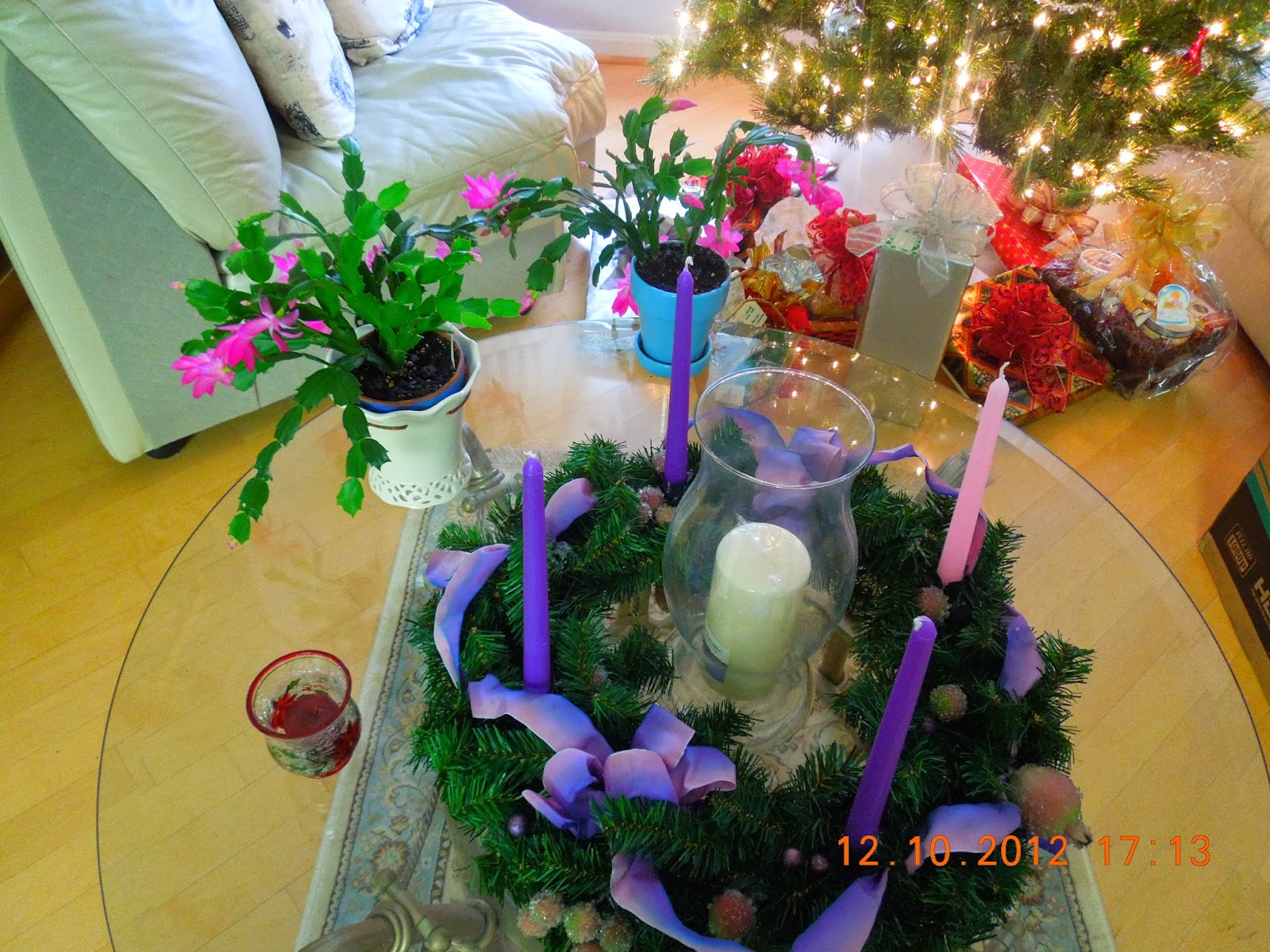
As the season of Advent begins, the focus for this week is Hope. It is the first gift of Christmas.
It is a time to reflect back on the year and ask ourselves what can we do differently next year to improve our lives, to live closer to God, and to walk more in love. Each of us is on our own path and we each have different lessons to to learn, but learn them we must, if we want to move forward into a more peaceful and abundant life.

We may need to let go of unforgiveness or bitterness; be more grateful, generous, less self-centered. We may need to laugh more and stress less; surrender more and control less, trust more, and fear less. We are on the potter's wheel. In other words, God is molding us into His likeness and He uses the circumstances of life to change us. In every trial, there is a hidden treasure in the form of a lesson to be gleaned and applied to our lives.

Whatever changes have happened in your life this year, fret not. God can and will work it all out for your good. It is all a matter of trust and timing.
 
Where is your hope this season?  Is it in your job? Your relationships? Your family? Your bank account? People and things are subject to change in the blink of an eye. Rather, I choose to put my hope in the dependable and unchanging person of the Lord Jesus Christ. Whatever changes are going on in my life, I know I can stay steady because I hold on to Him. When others abandon us, Jesus promises to never leave us or forsake us. When finances are tight, Jesus promises to provide for all our needs. When we are stressed and anxious, Jesus promises us his peace. Who else can make and keep these promises?

This Advent season, I encourage you to put your hope in the Lord. No matter what changes you may have experienced this year, God's grace will be sufficient for you. Allow Him to change you. Be a prisoner of hope and see God give you double for your trouble. (Zech. 9:12)

If this post has encouraged and you'd like to receive my bi-weekly posts plus my free guide entitled "7 Steps to Finding Your Spiritual Path", enter your email in the box provided and do pass it on to your friends. Someone you know may need a little hope this season.

Until next week, stay tuned for more on healing, wholeness, and harmony and as always, keep looking up!


Ariel Paz

Thursday, November 29, 2018

7 Steps to Dealing with Pent Up Negative Emotions

Negative emotions can build up without us even realizing it and have disastrous consequences. Take the recent riots in Baltimore, for example. Years of pent up frustration and resentment erupted in a city-wide looting and rioting spree this week. Stores were vandalized. People were injured. Residents are shocked and alarmed. The governor has declared a state of emergency and called in the National Guard. The mayor ordered a curfew and police are patrolling the city with guns and weapons. The triggering event was the unnecessary death of a black youth while in the custody of city police. But why this violent reaction many ask?

We can ask the same question about the mass killings of innocent school children at Sandy Hook Elementary School or the shootings at Columbine, Aurora movie theatre, to name just a few. In my humble opinion, the root cause of aggressive violence, barring mental illness, is the inability to process one's negative emotions. We all have them. Stress from our jobs, school, our relationships, unfair treatment in the workplace and in the community can build up to an intolerable crescendo unless we learn to handle it in positive ways.

A video clip of a Baltimore city mom cursing and hitting her kid over the head has made headlines. Some people are condoning her actions.

I ask this question "What is she teaching her son?" Yes, I understand she was concerned and afraid for him. Any mother would be. But how we parents act in the difficult situations of life is how our kids are going to act when we're not around. I have seen many a mom smacking her kid, yelling at a child, and in general, being totally out of control. I have lost my temper a time or two when I was raising my kids as a single parent. One day, it dawned on me. What am I teaching my kids? It was a rude but necessary awakening.

Not only do we need to educate the kids on how to handle their emotions, we need to educate the parents. Do you think it is appropriate to curse and whack a child on the head to discipline them? We expect these kids to show respect to others, but if it has never been shown to them, this is an unrealistic expectation. Kids model the behavior that has been modeled to them. Remember the old adage, action speaks louder than words. So what can we do as parents? Here are some constructive ways we can better manage our emotions and hopefully, pass these on to our kids.

1) Allow myself to feel my emotions - negative as well as positive. Do not suppress or "stuff" them. Do not allow them to build up without expression.

2) Do not judge myself for having any type of emotion or feeling. Emotions and feelings are fleeting and temporary but they are messages that have a purpose.

3) Observe myself feeling the emotion. Identify the bodily reactions I experience such as a tight stomach, a headache, or stiff neck.

4) Understand the triggering event. Our thoughts trigger our emotions. What negative thought did I have that caused me to feel this way?

5) Realize an emotion does not control us. We control it. Take a few deep breaths to regain control.

6) Take positive action to change the situation. If the situation is out of my control, then I need to work on changing the way I perceive a situation. There is always a different way to view things.

7) Commend myself for being aware of my feelings and emotions. We will feel much more in control of our lives when we make a conscious choice rather than act on emotion.

Researchers have long studied the effects of yelling at kids. Here's a link from Today's Parent which says "Adolescents whose parents had been using yelling as a discipline method were more likely to have behavioral issues and to act out (including with vandalism and violence)."

This is a difficult and complicated subject to address. Negative emotions are not the only cause of violent behavior, but they are a big part of the problem in today's society. Many people prefer to put on a happy face and ignore the issues, but sooner or later, things come to the surface in one way or another. Negative emotions are normal. Everyone has them. The key is how to manage them in healthy and appropriate ways.

What ideas do you have on how to handle your emotions? What do you think this mom's behavior is teaching her son? What other ways do you use to discipline your kids? Do comment below.

Until next time, keep looking up!


Ariel Paz